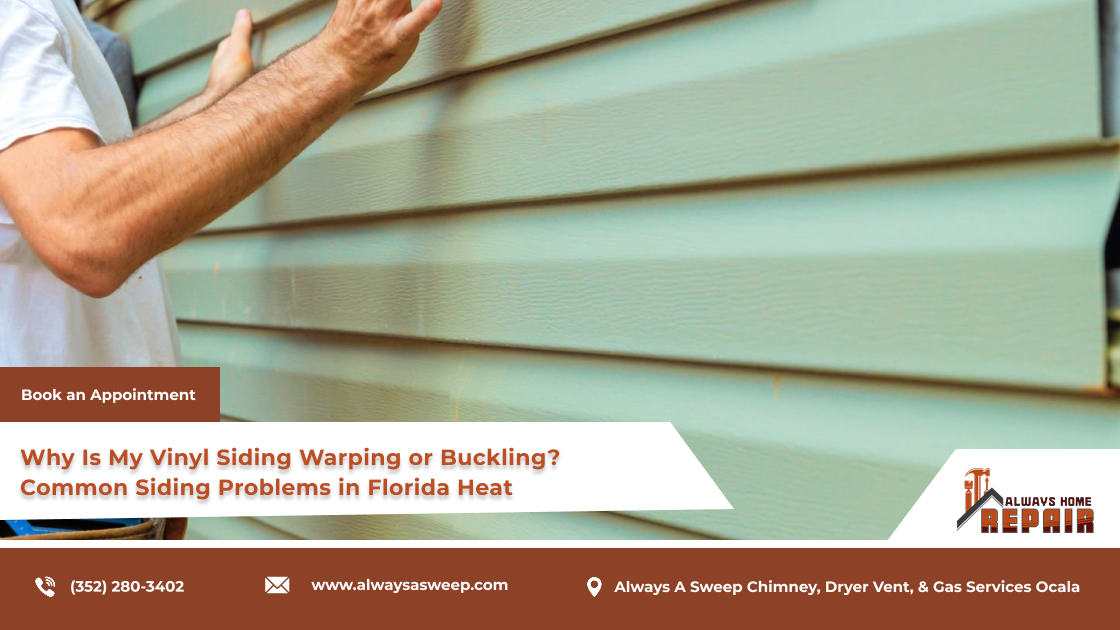
Vinyl siding is one of the most popular exterior choices for Florida homes, and for good reason. It’s affordable, low-maintenance, and holds up well against most weather conditions. But even the best siding can develop problems over time, especially in Florida’s intense heat and humidity. If you’ve noticed your vinyl siding starting to warp, buckle, or pull away from your home, you’re not alone.
Warped siding isn’t just an eyesore. It can allow moisture, insects, and debris to get behind your home’s protective barrier, leading to more serious structural issues. Understanding what causes siding problems and when to call for professional siding repair can save you time, money, and frustration down the road.
What Causes Vinyl Siding to Warp in Florida?
Florida’s climate puts unique stress on exterior materials. Vinyl siding expands and contracts with temperature changes, and when that movement is restricted or excessive, problems develop. Here are the most common culprits behind warped or buckled siding in the Sunshine State:
Extreme Heat Exposure
Vinyl siding can start to soften and warp when temperatures reach 160-165°F. In Florida, dark-colored siding or panels that receive direct afternoon sun can easily reach these temperatures. South and west-facing walls are particularly vulnerable. Once vinyl gets hot enough to soften, even minor pressure can cause permanent warping or buckling.
Improper Installation
Many siding problems trace back to installation errors. If panels are nailed too tightly, they can’t expand and contract naturally. This restriction creates stress points that eventually lead to buckling. Similarly, if panels aren’t properly overlapped or if starter strips are installed incorrectly, the entire system becomes unstable.
Reflected Heat from Windows or Other Surfaces
One of the most overlooked causes of siding damage is reflected heat. Energy-efficient windows, glass doors, or even outdoor grills can concentrate heat onto nearby siding panels. This focused heat can cause localized warping even when the ambient temperature isn’t extreme.
Poor Ventilation Behind the Siding
When air can’t circulate properly behind siding panels, heat builds up and creates hot spots. This is especially common when house wrap is installed incorrectly or when insulation blocks ventilation channels. The trapped heat can cause panels to soften and deform.
How to Identify Different Types of Siding Damage
Not all siding problems look the same, and understanding what you’re seeing helps determine the best solution:
Warping
Warped siding curves or bends outward from the house. You’ll often see this along the bottom edges of panels or in areas that receive intense sun exposure. Warped sections may also create gaps where the panels no longer lie flat against the house.
Buckling
Buckling happens when panels push against each other and create a bulge or wave pattern. This usually results from thermal expansion when panels can’t move freely. Buckled siding often affects multiple panels in a row.
Melting
In extreme cases, vinyl siding can actually melt, creating shiny, deformed areas. This typically happens near heat sources like grills, outdoor fire features, or reflected heat from windows. Melted siding is often permanently damaged and requires siding replacement.
Pulling Away
When siding starts to separate from the house, it’s usually due to improper fastening or thermal movement. You might notice gaps at the top or bottom of panels, or entire sections that seem loose.
When DIY Fixes Work and When to Call Professionals
Some minor siding issues can be addressed by homeowners, but many require professional expertise to fix properly and prevent recurrence.
DIY Solutions for Minor Problems
If you have a single loose panel that’s otherwise undamaged, you might be able to re-secure it with proper fasteners. Cleaning oxidized or chalky siding can also improve appearance and help you assess the true condition of the material. However, be cautious about attempting repairs on your own, especially if multiple panels are affected.
When Professional Help is Essential
Warped, buckled, or melted siding almost always requires professional replacement. These problems indicate that the material has been structurally compromised and won’t return to its original shape. Additionally, if you’re seeing widespread issues across multiple panels, the problem likely involves installation or ventilation issues that need expert diagnosis.
Professional siding contractors like Always Home Repair can also identify underlying problems that homeowners might miss. Issues with house wrap, insulation, or structural elements often contribute to siding problems and need to be addressed during repairs. Our team specializes in both Hardie and vinyl siding installations, so we understand the specific challenges each material faces in Florida’s climate.
Preventing Future Siding Problems
While some wear is inevitable in Florida’s climate, several strategies can help protect your vinyl siding from premature damage:
Choose the Right Color: Light colors reflect more heat and are less likely to reach damaging temperatures. If you prefer darker colors, consider high-performance vinyl formulations designed for hot climates.
Work with Experienced Siding Specialists: Choose contractors like Always Home Repair who understand Florida’s climate challenges and specialize in both Hardie and vinyl siding. Proper fastening, ventilation, and thermal expansion planning are crucial for long-term performance, and our team ensures every installation meets these standards.
Monitor Heat Sources: Be aware of potential heat reflectors near your home. Outdoor grills, fire pits, and highly reflective surfaces should be positioned away from siding. Energy-efficient windows can also create focused heat that damages nearby panels.
Regular Maintenance: Inspect your siding annually for early signs of problems. Look for loose panels, gaps, or areas where the material appears stressed. Catching issues early makes repairs simpler and less expensive.
The Cost of Waiting vs. Acting Early
It’s tempting to ignore minor siding problems, especially if they’re not immediately visible from the street. However, damaged siding compromises your home’s protection against moisture, insects, and storms. What starts as a small warped section can quickly become widespread damage if the underlying cause isn’t addressed.
Early intervention not only costs less but also prevents secondary problems like water damage, mold growth, or pest infiltration. In Florida’s challenging climate, your home’s exterior protection is too important to compromise.
Why Florida Homeowners Choose Always Home Repair
At Always Home Repair, we’ve helped countless Ocala homeowners address vinyl siding problems caused by Florida’s intense climate. Our experience with both Hardie and vinyl siding gives us unique insight into which materials and installation techniques work best for different exposures and home styles. Our team has experience with all types of siding materials and knows how to identify problems early, before they become expensive emergencies.
We work with high-quality materials designed for Florida’s climate and ensure proper installation techniques that account for thermal expansion and humidity. Whether you need a few panels replaced or a complete siding renovation, we provide reliable solutions that protect your home and enhance its appearance.
FAQs
- Can warped vinyl siding be repaired, or does it need to be replaced? Once vinyl siding has warped or buckled, the material is permanently damaged and needs replacement. The panels won’t return to their original shape, and attempting to flatten them often causes cracking or further damage.
- Why does vinyl siding warp more in Florida than in other states? Florida’s intense heat, high humidity, and frequent thermal cycling put extra stress on vinyl siding. Temperatures that cause vinyl to soften and deform are more common here, especially on south and west-facing walls.
- How can I tell if my siding problems are from poor installation or normal wear? Professional assessment is usually needed to determine the root cause. However, problems that appear shortly after installation or affect multiple panels in a pattern often indicate installation issues rather than normal aging.
- Is darker-colored vinyl siding a bad choice in Florida? Darker colors can reach higher temperatures and are more prone to heat-related damage. However, high-quality vinyl formulations and proper installation can make darker siding viable. Light colors are generally safer choices for Florida homes.
- How long should vinyl siding last in Florida’s climate? Quality vinyl siding with proper installation should last 15-20 years in Florida, though this varies based on color, exposure, and maintenance. Regular inspection and prompt repair of minor issues can extend this lifespan.
If you’re dealing with warped or damaged vinyl siding in Ocala or the surrounding areas, Always Home Repair is here to help. Contact us today for a professional assessment and learn how we can restore your home’s protection and curb appeal with quality siding solutions designed for Florida’s challenging climate.