5 Critical Signs Your Deck Needs Professional Repair Before Hurricane Season
Your deck needs professional repair if you notice ledger board gaps, soft wood rot, wobbly railings, or rusted hardware. These structural flaws turn your deck into a dangerous projectile during high-wind events. Addressing these issues now ensures your home remains safe and meets coastal building codes before the next storm hits.
As the Atlantic hurricane season approaches, coastal homeowners prioritize boarding windows and checking generators. However, the largest wooden structure attached to your home—the deck—is often the most overlooked liability. A compromised deck isn’t just an eyesore; it’s a structural hazard that can jeopardize your entire household during 100+ mph winds.
Key Takeaways
-
Check the Ledger: Any gap between your house and the deck is an immediate safety emergency.
-
The Screwdriver Test: Spongy wood at the base of posts indicates rot that will fail under uplift pressure.
-
Hardware Matters: Rusted nails have zero holding power; professional repair uses 316-grade stainless steel.
-
Wind Physics: Decks act like sails in hurricanes; if not anchored properly, they can detach and destroy property.
Table of Contents
-
The Physics of Hurricane Wind vs. Decks
-
Sign 1: Ledger Board Gaps
-
Sign 2: Structural Wood Rot
-
Sign 3: Railing Instability
-
Sign 4: Corroded Hardware
-
Sign 5: Sinking Footings
-
Why DIY Repairs Fail in Storms
The Physics of Hurricane Wind vs. Decks
Most decks are designed to handle downward “gravity loads”—the weight of your grill and guests. However, they are rarely built by amateurs to withstand “uplift loads” caused by hurricane-force winds.
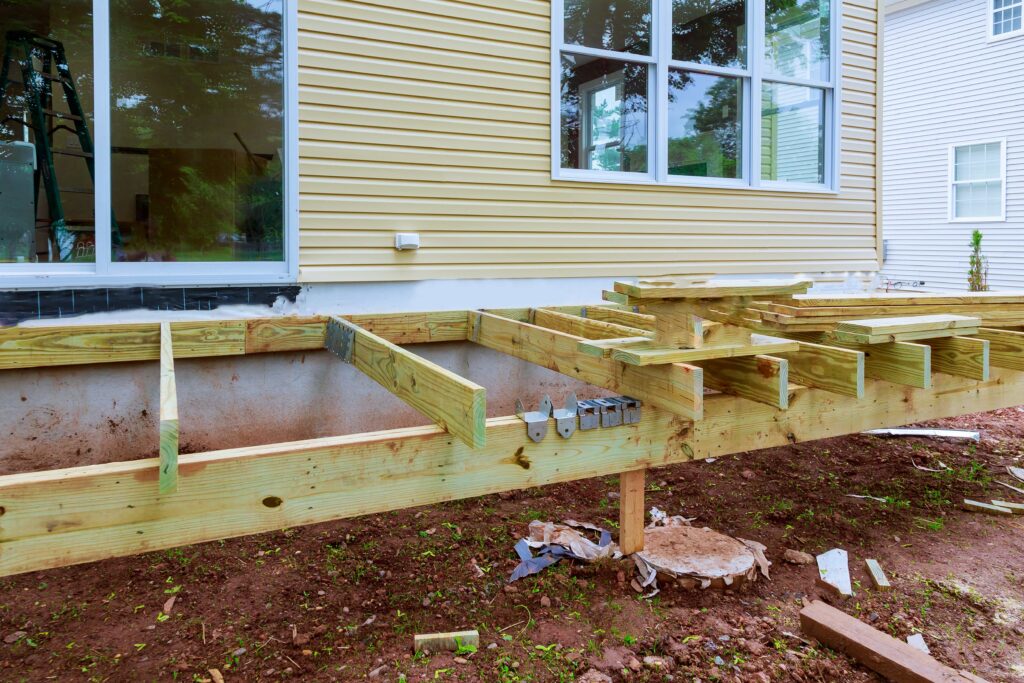
During a storm, wind gets trapped under deck boards, creating massive upward pressure. Without professional reinforcement like hurricane-rated tension ties, the structure can lift off its piers.
“Coastal construction requires understanding lateral load paths. If the connection from the joist to the beam isn’t mechanically fastened, the wind will find the weakest link”. — Lead Engineer, Always Home Repair.
Sign 1: Ledger Board Gaps (The Anchor Point)
The ledger board is the horizontal beam that bolts your deck to your house’s rim joist. This is the single most common point of failure during catastrophic deck collapses.
Identifying the Danger Sign
Walk underneath your deck and inspect the connection point. If you see a gap wide enough to fit a credit card, your deck needs professional repair immediately. This indicates fasteners are pulling out or the wood frame is rotting.
The Professional Solution
A standard handyman might just hammer in more nails. This is a grave mistake. Professionals install structural lag screws and ensure “Z-flashing” is present to redirect water. According to the International Association of Certified Home Inspectors, ledger failure causes 90% of deck collapses.
Check your ledger flashing. If you don’t see a metal or plastic lip over the top of the board, water is likely rotting your home’s frame.
Sign 2: Wood Rot and Structural Decay
Wood rot is a silent killer that often hides beneath a fresh coat of paint. Because coastal decks face high humidity and salt spray, the cellulose fibers break down rapidly.
Use the “Screwdriver Test”. Press a flat-head screwdriver into the base of your posts. If it sinks more than 1/4 inch, the wood is structurally compromised.
Brown Rot vs. White Rot
Not all rot is the same. Brown rot causes wood to crack into cubes and crumble, while white rot leaves wood feeling spongy. Our experts at Always Home Repair identify these variations to determine if you need localized patching or a full post replacement.
Many homeowners try to use “wood filler” on structural posts. This does nothing to restore the load-bearing capacity of the timber.
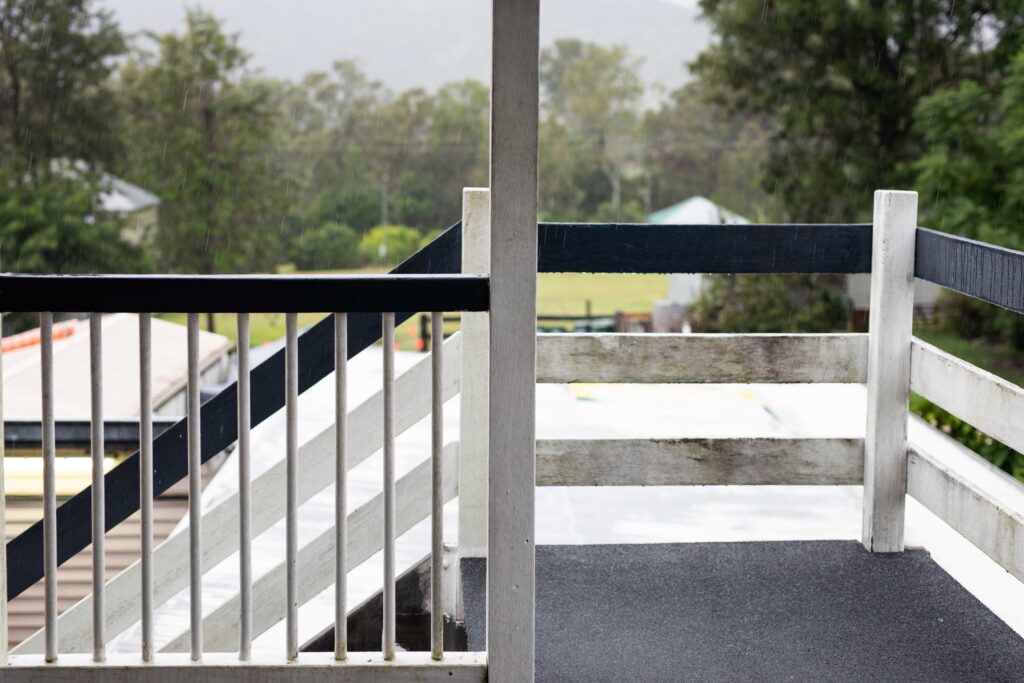
Sign 3: Railing Instability as a Wind Hazard
In a hurricane, railings act as a primary point of wind resistance. If they are loose, they become the first pieces of debris to break off and fly through your (or your neighbor’s) windows.
The “Wobble” Factor
If you can shake your railing and feel more than an inch of “give”, it is unsafe. Modern building codes require railings to withstand 200 pounds of concentrated force. Achieving this requires specific internal “blocking” that only a professional can properly install.
Sign 4: Hardware Corrosion and Nail Pull-Out
If your deck is over 10 years old, it likely uses standard galvanized hardware. In coastal environments, salt air creates an electrochemical reaction that eats through zinc coatings.
Why “Nail Pop” Matters
Are your nails sticking up? This “nail pop” means the wood has expanded and contracted so many times that the fasteners have lost their grip. In a storm, these boards peel off like shingles.
Research from the Journal of Coastal Research shows that stainless steel fasteners (Grade 316) last 5x longer than standard galvanized nails in salt-spray zones.
Sign 5: Sinking Footings and Soil Erosion
Heavy rains usually precede hurricanes, saturating the soil and increasing hydrostatic pressure. This can cause concrete piers to shift or sink.
Symptoms of Foundation Failure
-
An uneven or sloping deck surface.
-
Cracks in the concrete footings.
-
A “bouncy” feeling when walking.
Fixing a foundation involves hydraulic jacking and pouring new, deeper footers that reach stable soil. This is a high-risk task that requires professional equipment.
The DIY Trap and Why Amateur Fixes Fail
We understand the appeal of a weekend project, but when it comes to hurricane prep, the DIY route is a dangerous shortcut.
-
Hidden Rot: Amateurs often paint over rot, hiding the danger until the wind exposes it.
-
Wrong Fasteners: Using deck screws where structural through-bolts are required leads to shear failure.
-
Insurance Risk: If a deck fails and wasn’t repaired to code, your insurance company may deny your claim.
FAQ for Deck Safety and Hurricanes
How often does a deck need professional repair?
We recommend a professional structural audit every 2–3 years for coastal homes. Salt air accelerates hardware corrosion, making frequent checks a necessity.
Can I just add more nails to a loose board?
No. If a board is loose, the underlying joist is likely rotted or the fastener has failed. Simply adding more nails is a temporary fix that won’t hold during a hurricane.
Are composite decks safer in hurricanes?
While composite boards don’t rot, the frame is usually still wood. The frame is what fails in a storm, not the surface boards. Your frame must be checked regardless of the surface material.
What is the best hardware for coastal decks?
We recommend 316-grade stainless steel or triple-zinc-coated fasteners. These materials resist the corrosive effects of salt air and high humidity.
Don’t Wait for the Warning
By the time a hurricane warning is issued, it is too late for the structural reinforcements your home deserves. If you see signs that your deck needs professional repair, acting now is the only way to ensure your property and family are protected.
To secure your deck today:
-
Perform the screwdriver test on all base posts.
-
Inspect the ledger board for any visible gaps.
-
Contact Always Home Repair for a certified structural audit.
-
Schedule your repairs before the peak of the season.
Contact Always Home Repair for a Free Coastal Safety Inspection
Rot on the deck often means rot elsewhere. We also replace rotted fascia and soffits as part of our venting and roof repairs.