
Professional Secrets for Smoke Detectors, Fire Extinguishers, and Beyond
A home safety audit is a systematic, 60-minute diagnostic check of your property’s critical safety systems—including smoke detectors, fire extinguishers, and electrical panels—designed to prevent minor hazards from becoming catastrophic losses. In the realm of property management and family protection, the difference between a minor scare and total devastation often comes down to this focused hour of diligence.
While many homeowners feel confident in their ability to “handyman” their way through daily life, certain home systems require specialized scrutiny. A home safety audit is not merely a passive “honey-do” list item; it is an active, ongoing defense strategy. At Always Home Repair, we specialize in the intersection of structural integrity and resident safety. This comprehensive guide leverages our extensive field experience to show you how to conduct a high-level audit, while clearly defining where DIY efforts must end and professional intervention begins.
Key Takeaways
-
Upgrade Detection Systems: A basic beep only tests the battery; you must ensure you have interconnected, dual-sensor (ionization and photoelectric) smoke alarms.
-
Match Extinguishers to Hazards: Kitchens require different fire suppression chemicals (Class K) than garages or home offices.
-
Monitor Environmental Impacts: High humidity and seasonal extreme weather can rapidly degrade safety sensors and expose structural vulnerabilities.
-
Know Your Limits: Visually inspect electrical and gas lines, but always hire a licensed professional to perform actual repairs or component tightening.
Table of Contents
-
Why a Home Safety Audit is Crucial for Property Protection
-
Upgrading Smoke Detectors: Beyond the Basic Beep
-
Fire Extinguisher Standards: Professional Suppression
-
The “Beyond” Checklist: Electrical, Gas, and Structural Health
-
Why Professional Experience is Non-Negotiable
-
Frequently Asked Questions (FAQ)
Why a Home Safety Audit is Crucial for Property Protection
A home safety audit systematically identifies system failures, outdated technology, and environmental risks before they cause property damage or physical harm, moving homeowners from a passive to a proactive prevention strategy.
Within the residential maintenance niche, safety is too often treated as a “set it and forget it” category. However, a proper home safety audit is a living, breathing process. Your home’s infrastructure changes as it ages, and your safety protocols must evolve alongside it.
The True Cost of Neglect
When you perform a home safety audit, you are looking for more than just dead batteries in a hallway monitor. You are looking for hidden system failures and environmental risks. For the modern homeowner, this audit is the foundational step in a professional-grade property prevention strategy.
Data Point: According to the National Fire Protection Association (NFPA), home fires remain the leading cause of property damage globally. A staggering percentage of these losses could be mitigated by early detection and proper, routine equipment maintenance.
Upgrading Smoke Detectors: Beyond the Basic Beep
Modern safety standards require hardwired, interconnected smoke detectors that utilize both ionization and photoelectric sensors to detect both fast-moving flames and smoldering fires instantly.
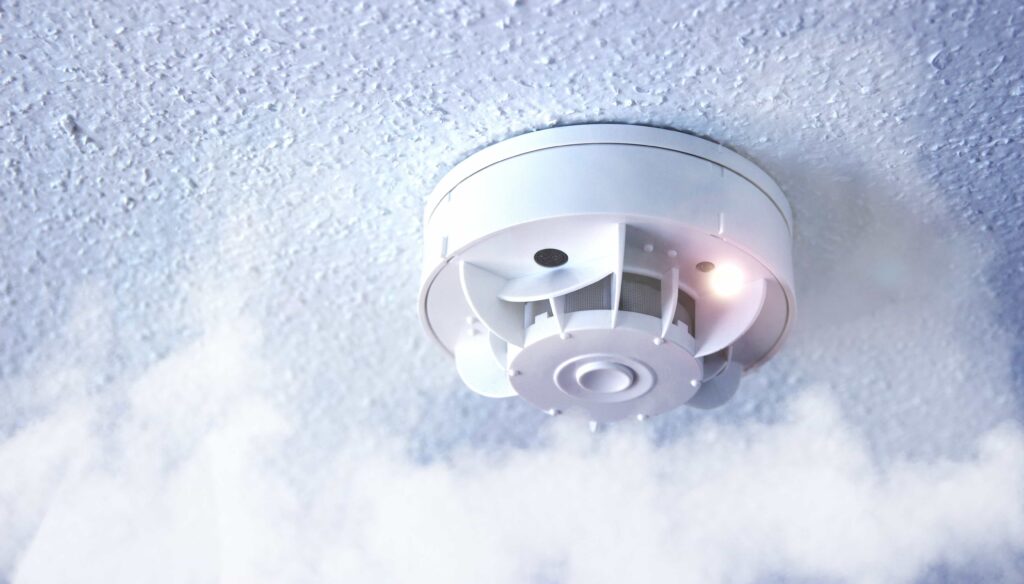
Most DIY guides tell you to “press the button” on your ceiling alarm. True professional expertise dictates that the button only tests the battery and the siren. It does not test the sensor’s actual ability to detect smoke. During your home safety audit, you must evaluate the technology hiding behind the plastic cover.
The Professional Technology Gap
There are two primary sensors used in residential fire alarms: Ionization (which detects fast, open flames) and Photoelectric (which detects slow, smoldering fires).
If your detectors are solely ionization-based, you are statistically more likely to experience a fatal delay in notification during a slow-burning upholstery fire. Professionals recommend a dual-path approach, installing alarms that feature both technologies.
Expert Insight: Environmental factors severely impact sensor lifespan. In regions with persistent high humidity and extreme summer heat—such as the coastal climates of Florida—moisture can cause false alarms or corrode photoelectric sensors prematurely. These units should be wiped down monthly and replaced strictly every 10 years.
Placement and Interconnectivity
A professional-grade home safety audit ensures that your detectors are “interconnected.” This means if a fire starts in the basement, the alarm in the master bedroom immediately sounds.
If your home relies on standalone battery units, you are operating on a dangerously outdated safety model. Upgrading to hardwired, interconnected systems is a high-skill task. It should never be a DIY project due to the extreme risk of electrical shock and improper wiring.
Fire Extinguisher Standards for Professional Suppression
A safe home requires multiple fire extinguishers tailored to specific room hazards, securely mounted at eye level, and strictly monitored for expiration dates and pressure loss.
A thorough home safety audit often reveals a terrifying reality: extinguishers that are expired, the wrong chemical class, or stored in completely inaccessible locations.
Why DIY Choices Often Fail
The average homeowner buys the cheapest “ABC” dry chemical extinguisher from a big-box hardware store and hopes for the best. However, professional safety standards require specific weights and chemical compositions based on the unique risk profile of the room.
-
Kitchens: Require Class K or specialized dry chemical agents that will smother grease fires without splashing burning oil.
-
Garages: Require higher-capacity units designed for sudden fuel, paint, and chemical fires.
-
Home Offices: Require CO2 or clean-agent extinguishers to suppress flames without destroying expensive servers and computer equipment.
Common Mistake: Storing a fire extinguisher under the kitchen sink behind cleaning supplies. If a grease fire erupts on the stove, reaching under the adjacent sink puts you directly in the path of the flames.
The 10-Second Rule
During your home safety audit, time exactly how long it takes to reach an extinguisher from the furthest point in the room. If it takes longer than 10 seconds, it is useless. Professionals recommend mounting units securely at eye level near room exits, a standard safety practice we implement at Always Home Repair.
The “Beyond” Checklist: Electrical, Gas, and Structural Health
Beyond fire prevention, a comprehensive audit must include visual inspections of the main electrical breaker panel, testing gas shut-off valves, and evaluating exterior structural readiness for seasonal weather.
The “Beyond” section of your home safety audit is where the most significant, unseen risks hide. These are also the exact areas where enthusiastic DIYers often get into serious trouble.
Electrical Panel Integrity
Check your main breaker box for visual “hot spots,” scorch marks, or a distinct “ozone” smell (which smells like burnt plastic or wire). These are prime indicators of electrical arcing.
While you can visually inspect the panel, never attempt to tighten lugs or replace breakers yourself. This is a high-voltage environment where a single slip can easily be fatal.
Gas Line Surveillance and Weather Readiness
Do you know exactly where your main gas shut-off valve is located? Part of your home safety audit includes ensuring that this valve isn’t rusted shut. Ensure a specialized shut-off wrench is chained or stored securely nearby.
Quick Tip: If you live in an area prone to severe weather—like hurricane zones—your audit must include testing your standby generator connections and ensuring all exterior utility lines are secure before storm season hits.
If you smell even a faint hint of “rotten eggs” near your appliances, skip the DIY check. Evacuate and call a professional immediately. Gas leaks are highly volatile and require calibrated electronic sniffing tools to locate safely.
Why Professional Experience is Non-Negotiable
Relying on DIY inspections creates a false sense of security; professionals possess the specialized tools, code knowledge, and experience required to identify invisible hazards and maintain insurance compliance.
We must be direct: DIY home safety is an oxymoron. While you can easily change a 9-volt battery, you cannot certify a complex home safety system. Relying solely on your own untrained eye for a home safety audit creates a dangerous “false sense of security.”
The Risks of Avoiding the Experts
-
The Insurance Risk: Many homeowner insurance providers require proof of professional inspection for certain damage claims. A handwritten DIY logbook rarely holds up during a high-stakes claims audit.
-
The Skill Gap: Professionals bring “Experience” and “Expertise.” We have seen exactly how fires spread in real-time and how faulty electrical grounds hide silently behind drywall.
-
The Equipment Gap: Professionals utilize advanced tools, such as thermal imaging cameras, to find overheating wires inside walls that are completely invisible to the naked eye.
At Always Home Repair, we strongly discourage property owners from attempting to service hardwired alarms, gas manifolds, or main electrical lines. The risk of creating a larger hazard is simply too great.
Frequently Asked Questions (FAQ)
How often should I conduct a home safety audit?
You should conduct a basic home safety audit at least twice a year, ideally coinciding with daylight saving time when you change your clocks. However, a comprehensive professional inspection of electrical and gas systems should be scheduled every three to five years.
What is the most important part of a home safety audit?
The most critical element is verifying that your early warning systems—specifically smoke detectors and carbon monoxide detectors—are fully operational, unexpired, and strategically placed near all sleeping areas.
Do smoke detectors expire?
Yes. Both ionization and photoelectric smoke detectors have a strict maximum lifespan of 10 years from the date of manufacture. After a decade, the internal sensors degrade rapidly, rendering the unit unreliable even with fresh batteries.
How do I check if my electrical panel is safe?
During a home safety audit, perform a purely visual and olfactory check. Look for scorch marks, rust, or loose wires, and smell for burning plastic. If you notice any of these signs, immediately contact a licensed electrician; do not touch the panel components yourself.
Can I test a fire extinguisher?
No, you cannot “test spray” a fire extinguisher. Discharging even a tiny amount of the pressurized chemical will break the internal seal, causing the remaining propellant gas to leak out over time. Instead, check the pressure gauge visually to ensure the needle is in the green zone.
Moving from Passive to Proactive
A thorough home safety audit marks the vital transition from passive neglect to proactive prevention. It is the realization that your home’s safety systems are not permanent architectural fixtures, but sensitive mechanical devices that require diligent maintenance. By checking your alarms, upgrading your extinguishers, and monitoring your utilities, you actively protect your property’s value and your family’s lives.
While the “1-Hour Audit” is a powerful tool for the responsible homeowner, it is only half of the equation. The other half is knowing exactly when to call in the experts.
Next Steps for Your Home Safety:
-
Test all smoke and carbon monoxide detectors this weekend.
-
Verify the expiration dates and pressure gauges on all fire extinguishers.
-
Locate your main gas and water shut-off valves.
-
Contact a licensed professional to inspect any electrical anomalies or hardwire upgrades.
Don’t gamble with your family’s safety by attempting complex repairs yourself. Contact Always Home Repair today to schedule a professional, comprehensive safety evaluation of your property.