How to Spot Structural Weaknesses in Residential Decks Before a Collapse
Finding and fixing structural weaknesses in residential decks before the summer season starts is the single most critical maintenance task a homeowner can perform to prevent a catastrophic collapse. A structurally sound deck requires secure ledger board connections, rot-free pressure-treated lumber, and rust-free metal fasteners; if any of these elements fail, the entire platform becomes an immediate safety hazard.
Outdoor platforms are spaces for relaxation, family barbecues, and beautiful summer nights. However, they are also incredibly heavy structures subjected to relentless environmental stress, shifting live loads, and constant moisture.
A deck failure can happen in an instant, changing a peaceful afternoon into a severe medical crisis. To prevent catastrophic failure, property owners must understand exactly what signs to look for beneath the floorboards, how local weather patterns speed up material deterioration, and why professional structural evaluations are indispensable.
📌 Key Takeaways
The Ledger Board is Critical: Over 90% of sudden deck collapses are caused by compromised ledger boards detaching from the home.
Moisture is the Enemy: Active wood rot and fungal decay silently destroy the load-bearing capacity of your support joists.
Corrosion Kills Hardware: Rusted joist hangers and carriage bolts rapidly lose their tensile strength in humid or coastal climates.
DIY is Dangerous: Structural repairs require strict adherence to international building codes and should only be handled by licensed contractors.
Table of Contents
-
The High Stakes of Deck Safety
-
5 Critical Warning Signs of Deck Structural Failure
-
How Regional Climates Accelerate Deck Degradation
-
The Ledger Board Problem: The Leading Cause of Collapse
-
The Risks of DIY Repairs vs. Professional Expertise
-
Frequently Asked Questions About Deck Safety
-
Conclusion: Next Steps for a Safe Outdoor Space
The High Stakes of Deck Safety
Quick Answer: Structurally compromised decks cause thousands of preventable injuries every year because outdoor platforms must support heavy live loads while constantly fighting wind, moisture, and thermal expansion.
Every year, aging outdoor platforms cause thousands of preventable injuries across the country. Unlike internal flooring, outdoor structures must support significant live loads—the combined, shifting weight of people, grills, and heavy patio furniture. They must do this while constantly fighting moisture, high-velocity winds, and thermal movement.
Identifying structural weaknesses in residential decks early saves money on extensive rebuilds and protects your family and guests from severe physical harm. Because outdoor wood naturally degrades over time, assuming a 15-year-old deck is safe just because it “looks fine” is a dangerous gamble.
📊 Data Point: According to injury data tracked by the U.S. Consumer Product Safety Commission (CPSC), structural failures involving outdoor balconies, porches, and decks result in thousands of emergency room visits annually, making proactive property assessments a matter of core household safety.
5 Critical Warning Signs of Deck Structural Failure
Quick Answer: The five most urgent signs of structural failure include widespread wood rot, unstable guardrails, heavily corroded metal fasteners, pulling ledger boards, and sinking concrete footings.
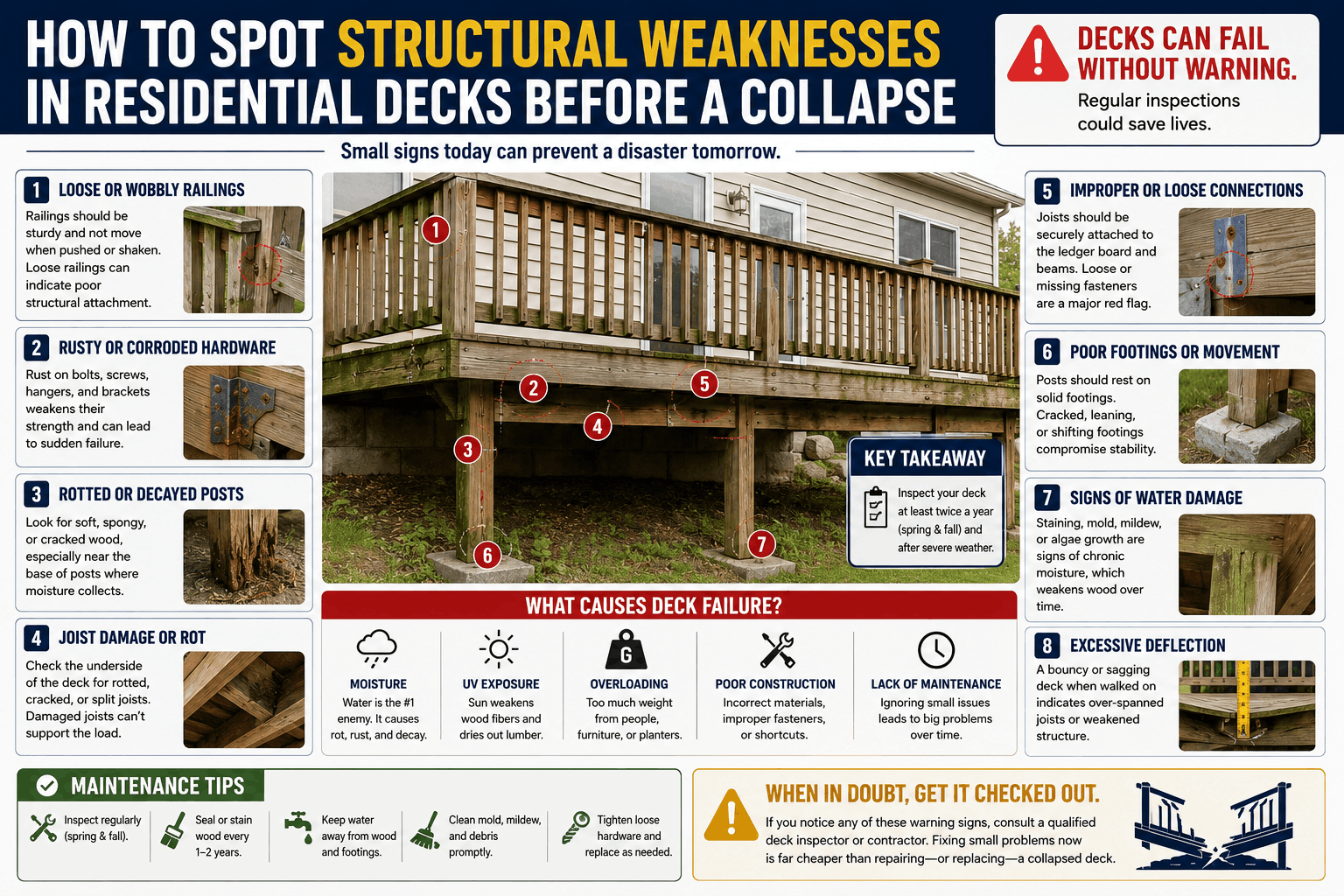
Spotting structural weaknesses in residential decks requires looking far beyond cosmetic surface issues. A faded stain or a scratched deck board looks unappealing, but it will not cause a total collapse. Instead, you must focus your seasonal inspections on these five fundamental threat areas.
Widespread Wood Rot and Soft Spots
Wood rot is a biological process where moisture-loving fungi break down the vital cellulose fibers that give structural lumber its strength. Check parts close to the ground, joints where two boards meet, and the areas directly surrounding large metal fasteners.
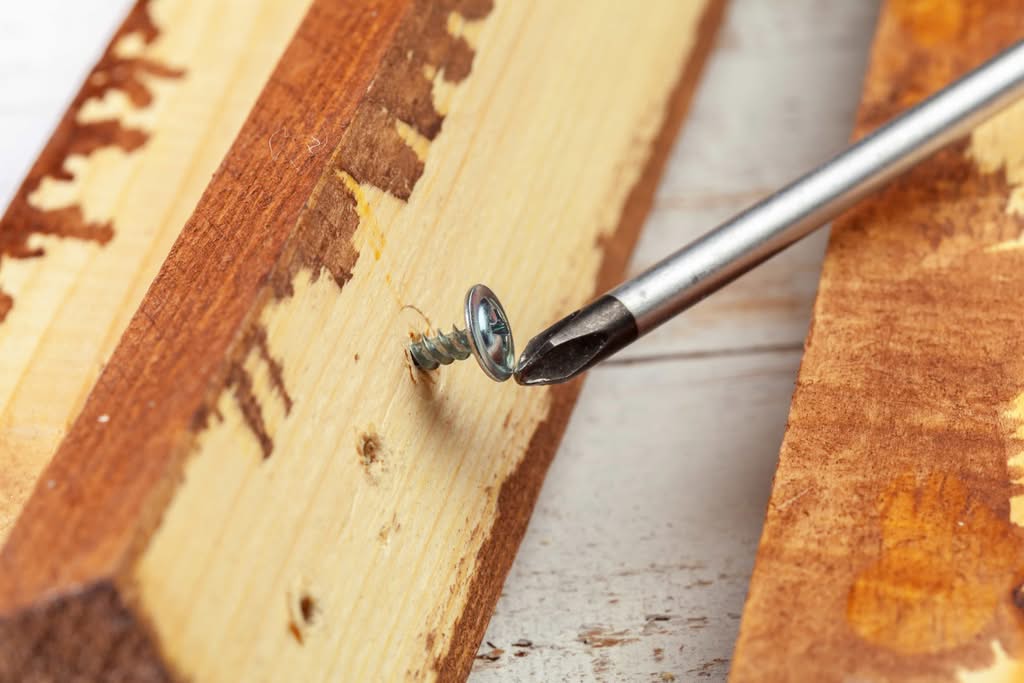
The Ice Pick Test: Take a flathead screwdriver or an ice pick and gently press it into questionable areas. If the tool sinks more than a quarter-inch into the wood without much resistance, or if the wood feels soft and spongy, you are looking at active fungal decay that compromises the beam.
Unstable, Shaky, or Low Railings
Railings are your primary line of defense against accidental, high-elevation falls. If your perimeter guardrails wobble when pushed, the structural connection between the vertical posts and the horizontal joists is severely compromised. This is often caused by standard wood shrinkage over time, rusted carriage bolts, or inadequate framing support blocking beneath the surface.
Corroding Metal Hardware and Fasteners
Modern decks rely heavily on specialized metal connectors, including galvanized joist hangers, structural screws, ledger bolts, and post-to-beam connectors. When these critical components rust, they lose their tensile strength entirely.
Look closely for flaking orange rust or dark, bleeding stains around your structural metal hardware. Rust actually expands inside the wood fibers, which can aggressively split the surrounding lumber and accelerate structural failure.
Compromised Ledger Boards and Flashing
The ledger board is the long piece of pressure-treated lumber that secures your deck directly to the rim joist of your home. It handles roughly half of the total load-bearing capacity of the structure. If this connection pulls away even a fraction of an inch, the entire frame is at high risk of sudden separation.
Shifting Foundations or Sinking Footings
The vertical posts supporting your deck must rest on solid concrete footings poured well below your local frost line. Soil erosion, poor yard drainage, or improper footing depths can cause these concrete piers to shift or sink. If you notice an uneven floor, a distinct slope away from the house, or wooden posts losing direct contact with their concrete bases, the structural foundation is actively failing.
⚠️ Common Mistake: Ignoring deck flashing. Many homeowners assume a pulling ledger board just needs more screws. In reality, missing metal flashing allows rainwater behind the board, rotting out the home’s structural framing from the inside out.
How Regional Climates Accelerate Deck Degradation
Quick Answer: Regional climates dictate how fast a deck fails. Midwestern freeze-thaw cycles crack wood grain, while Coastal humidity and salt air rapidly corrode metal structural fasteners.
Environmental exposure plays a massive role in exposing and worsening structural weaknesses in residential decks. Different parts of the country face highly distinct weathering challenges that wear down building materials at different rates.
| Climate Region | Primary Environmental Stressors | Core Structural Impact |
| Midwest (e.g., Indiana) | Extreme freeze-thaw cycles, heavy winter snow loads, high summer humidity. | Moisture freezes inside wood pores, expanding and cracking the lumber grain over time. |
| Coastal/Subtropical (e.g., Florida) | Torrential rainfall, intense UV exposure, salt-air exposure. | Saltwater air rapidly corrodes metal fasteners; high moisture feeds rot-causing fungi year-round. |
| Arid/Desert (e.g., Arizona) | Extreme UV radiation, rapid temperature drops at night, ultra-low humidity. | Severe wood shrinkage causes structural boards to warp, cup, and pull standard fasteners completely out of the frame. |
In regions experiencing harsh winters, wood expands and contracts violently between freezing nights and hot summers. This constant geometric shifting loosens structural screws and widens surface cracks. Conversely, in coastal states, high ambient humidity and salt spray speed up electrochemical oxidation in metal connectors, damaging standard galvanized hardware much faster than inland conditions.
4. The Ledger Board Problem: The Leading Cause of Collapse
Quick Answer: A failing ledger board is the leading cause of sudden deck collapses. Decks built with basic nails instead of structural through-bolts are highly susceptible to sudden detachment.
If you analyze historical engineering reports of catastrophic deck failures, a staggering majority stem directly from issues with the ledger board connection. When a deck pulls away from a house, it happens incredibly fast, usually giving the occupants zero warning before the structure hits the ground.
Many older decks were built using simple framing nails rather than thick, structural lag screws or heavy-duty through-bolts to attach the ledger board. Nails completely lack the withdrawal resistance required to withstand heavy, moving live loads.
Furthermore, if the waterproof flashing membrane (usually made of aluminum or heavy vinyl) above the ledger board is missing or installed incorrectly, rainwater runs directly behind the board. This traps standing moisture against your home’s interior wood framing, rotting out both the deck ledger and your house wall simultaneously.
The Risks of DIY Repairs vs. Professional Expertise
Quick Answer: Attempting to fix major structural flaws without engineering knowledge can shift weight loads dangerously. Professional contractors ensure compliance with international building codes and use advanced diagnostic tools.
Fixing cosmetic deck boards or applying a fresh coat of water-resistant sealant is a great weekend project for an enthusiastic homeowner. However, attempting to address deep structural weaknesses in residential decks requires professional engineering training and specialized commercial tools.
Outdoor platforms must comply with strict engineering guidelines, such as the International Residential Code (IRC), specifically Section R507. This code dictates specific allowable joist spans, safe cantilevers, and required fastener schedules.
-
Load-Bearing Dynamics: Modifying primary beams, joists, or structural posts without a thorough grasp of structural engineering can accidentally shift weight loads onto weak points, making the entire platform highly unstable.
-
Permitting & Compliance: Most structural repairs require municipal building permits and official city inspections. Working without these can result in heavy fines and create major liability issues when you attempt to sell your property.
-
Advanced Tooling: Professional deck inspectors use specialized moisture meters, structural scoping cameras, and advanced heavy-duty fasteners to safely reinforce heavy framing systems without compromising the existing wood.
💡 Expert Insight: Never use standard indoor drywall screws for outdoor deck repairs. They are brittle and lack the shear strength required for outdoor structures. Always use specialized, ACQ-approved structural screws.
Frequently Asked Questions About Deck Safety
How often should I inspect my residential deck for structural weaknesses?
You should perform a thorough visual inspection of your deck at least once a year, ideally in the spring before heavy summer usage. Look for loose railings, rusted metal joist hangers, and spongy wood near the ground.
What is the average lifespan of a pressure-treated wood deck?
With proper annual maintenance and sealing, a standard pressure-treated wood deck typically lasts between 15 and 20 years. However, the structural framing underneath may degrade faster if exposed to poor drainage or constant trapped moisture.
Can I just paint over rusted deck hardware?
No. Painting over rusted structural hardware only hides the problem while the metal continues to oxidize and weaken underneath. Rusted joist hangers, carriage bolts, and ledger screws must be entirely replaced with correctly sized, hot-dipped galvanized or stainless steel components.
Does homeowners insurance cover deck collapses?
Homeowners insurance generally covers sudden, accidental damage (like a tree falling on the deck). However, if a deck collapses due to long-term neglect, ignored wood rot, or unpermitted DIY construction, insurance companies will likely deny the claim.
How do I know if my deck ledger board is failing?
Look underneath the deck where it meets the house. If there is a visible gap between the ledger board and the home’s exterior wall, if the structural lag bolts are backing out, or if there is water staining down the siding below the deck, the connection is failing and requires immediate professional attention.
Conclusion: Next Steps for a Safe Outdoor Space
Understanding and identifying structural weaknesses in residential decks is not about inciting panic; it is about taking responsible, proactive ownership of your property’s safety. By keeping a close eye on your ledger board connections, monitoring metal fasteners for rust, and performing the simple ice pick test on suspect wood, you can catch minor issues before they evolve into catastrophic failures.
If you have discovered any of the five warning signs outlined in this guide, do not attempt to patch the structural frame yourself.
-
Keep Off the Structure: Limit foot traffic and remove heavy grills or furniture.
-
Document the Damage: Take clear photos of rusted hardware, pulling ledger boards, and sinking footings.
-
Call a Professional: Reach out to a licensed structural contractor to assess the load-bearing capacity of your platform.
Protect your family and your property equity. Take the time to inspect your outdoor spaces today, and contact our licensed deck repair team to ensure your summer season remains safe, secure, and structurally sound.